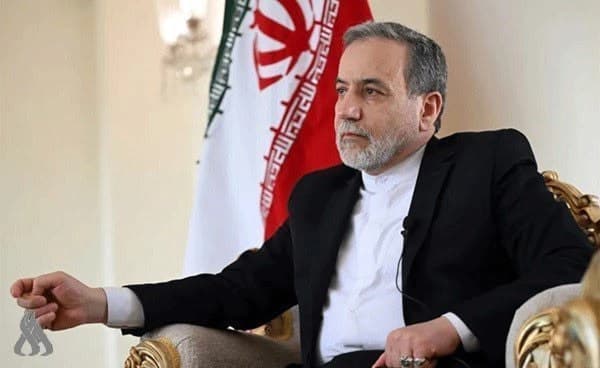

ERBIL, Kurdistan Region – Iranian Foreign Minister Abbas Araghchi said Tehran is seeking to establish special shipping routes for Iraqi oil tankers passing through the Strait of Hormuz to reduce Baghdad's economic losses amid ongoing restrictions on maritime traffic.
In an interview with Iraqi state media (INA) aired on Tuesday evening, Araghchi said Tehran and Muscat had established designated maritime routes for traffic entering and leaving the strait, with technical coordinates prepared for submission to the International Maritime Organization (IMO).
"We are aware of this and have made serious efforts to reduce these costs for the Iraqi side," Araghchi said when asked about the losses Baghdad had sustained from the restrictions.
Asked how Tehran had attempted to help, he replied: "By opening certain special routes for Iraqi ships to pass through."
Araghchi blamed the United States and Israel for the economic disruption, saying the consequences of their military campaign against Iran had extended across the region.
He also said Iran and Oman had reached an agreement on designated routes for ships entering and leaving the Strait of Hormuz, with maps and geographical coordinates already prepared.
"We have previously announced our agreement with the Sultanate of Oman regarding the map of designated routes in the strait," he said, adding that the routes must be registered with the International Maritime Organization (IMO) before receiving formal approval.
However, Araghchi stressed that the technical arrangements did not mean the waterway would reopen to general commercial traffic without a political agreement between Tehran and Washington.
"The Strait of Hormuz is still closed, and any ship attempting to pass through this waterway will face serious security problems," he warned.
The foreign minister's remarks coincided with claims from Iran's Islamic Revolutionary Guard Corps (IRGC) Navy that a supertanker carrying more than two million barrels of crude oil exploded after striking a naval mine south of the strait on Tuesday. The IRGC claimed the vessel had disabled its navigation systems and used an unauthorized route.
Indirect Negotiations and Diplomatic Deadlock
Araghchi noted that indirect discussions with Washington continue via mediators in Qatar and Pakistan.
Tehran proposed a seven-day initiative that would fully reopen the strait on the sixth day if Washington fulfilled specific preliminary conditions under a previously signed memorandum of understanding in Islamabad. "The American side informed us that it agreed to the proposed conditions, but it also presented conditions of its own," Araghchi said, declining to disclose the additional American demands.
The diplomatic deadlock comes against a backdrop of reported military friction between allies. According to a Wednesday Financial Times report, the Israeli military had prepared an updated bank of targets—including Iranian nuclear facilities, energy infrastructure, and regime sites—for a multi-day bombing campaign scheduled for the weekend of October 10.
Israeli officials indicated the planned offensive was intended to exert maximum pressure on Tehran during ongoing negotiations. However, the operation was halted due to objections from US President Donald Trump, who opposed initiating a major military campaign ahead of the upcoming U.S. midterm elections in November.
The report follows an unannounced Tuesday visit to Israel by US Defense Secretary Pete Hegseth, who met with Israeli Prime Minister Benjamin Netanyahu to discuss regional security.
Addressing reporters from the Oval office regarding the strategic stance toward Iran on Tuesday, US President Donald Trump remarked, “We’re doing very well with Iran, we just have to make a final decision of which way do we want to win. Do we want to win the nice way or the not nice way.”
The ongoing disruption in the Strait of Hormuz continues to drive volatility across global crude markets, given the route’s critical importance to international energy shipments. While recent ship-tracking data indicates regional oil exports have maintained baseline volumes through alternative arrangements, ongoing security threats keep market prices reactive.
For Iraq, which relies heavily on crude exports transiting the Gulf, protracted restrictions present significant economic risks. Although Araghchi cited Iran's efforts to facilitate specific corridors for Iraqi tankers, implementation remains tied to broader negotiations between Washington and Tehran.
Last updated at 12:16 PM